
How to Prevent Strategy Execution Failure 6: The 5 Invisible Tolls of Leadership That Quietly Destroy Execution by Dr. Abiola Salami, Worldclass Performance Strategist

How to Prevent Strategy Execution Failure 6: The 5 Invisible Tolls of Leadership That Quietly Destroy Execution by Dr. Abiola Salami, Worldclass Performance Strategist
There is a version of leadership most people recognize. The confident executive. The composed decision-maker. The leader who speaks with clarity in meetings and delivers results under pressure. That is the visible side of leadership.
But there is another side far less visible, yet far more consequential.
It does not show up in boardroom presentations. It is not captured in performance reports. It is rarely discussed openly. Yet, it determines whether leadership performance is sustained or slowly begins to decline. It is the internal cost of leadership.
The Reality Leaders Rarely Admit
Leadership is not just about responsibility. It is about pressure accumulation. It is not one big moment byt many small, continuous demands i.e. the expectation to always deliver, the responsibility for decisions that affect others, the need to remain composed even when uncertain and the burden of carrying outcomes beyond your control.
Individually, these demands are manageable. But over time, they accumulate. And when they do, they create what I defined in my book Taming the Invisible Toll of Leadership Expectations released in 2025 as The 5 Invisible Tolls of Leadership. They are neither dramatic nor immediate but they are deeply consequential.
1. Physical Fatigue — When Leaders Are Present but Not Fully Effective
Leadership demands consistency but the human body operates on limits. Over time, long hours, constant availability, and continuous decision-making begin to take a toll. This is not always visible but internally, fatigue begins to affect mental sharpness, decision speed, emotional patience and strategic clarity.
Here is the danger, fatigue does not stop execution. It degrades execution slowly and subtly until the organization begins to feel the effects; because execution moves at the speed of leadership energy.
2. Emotional Drain — When Leaders Carry More Than They Release
Leadership is emotional work. It involves handling conflict, managing expectations and absorbing pressure from multiple directions but many leaders lack a system for releasing that pressure. So they carry conversations that cannot be expressed openly, frustrations that must be controlled and decisions that must be owned privately.
Over time, this creates emotional depletion and emotionally drained leaders do not stop leading. They simply begin to react instead of respond, withdraw instead of engage and avoid issues instead of addressing them. And that shift affects execution. Because leadership emotion sets the tone for the organization.
3. Relationship Strain — When Leadership Reduces Connection
As leaders rise, relationships change. Colleagues become cautious. Feedback becomes filtered. Conversations become controlled. And gradually, something important is lost i.e. authentic connection.
Leaders are surrounded by people but not always connected to them. This creates a hidden execution risk. Because when relationships weaken three things happen. (a) Information becomes incomplete (b) Feedback loses honesty (c) Decisions lose depth
With this, Execution does not fail immediately but it becomes less accurate, less informed and less responsive.
4. Cognitive Overload — When the Mind Becomes the Limiting Factor
Leadership today requires constant thinking. You are dealing with multiple priorities, multiple decisions and multiple responsibilities. And over time, leaders reach a threshold. This threshold is not yet burnout. It is overload. And when that happens, decision-making slows, focus becomes fragmented, clarity reduces and teams begin to wait.
At this point, leadership unintentionally becomes the bottleneck; not because of incompetence but because of capacity. And no organization can scale execution through a single overwhelmed mind.
5. Identity Fracture — When Leaders Stop Leading Freely
This is the most subtle and most dangerous toll. When leadership becomes tied to identity where you think and perhaps say “I must always succeed” “I cannot be wrong.” “I must maintain this standard” four things happen (a) The leader begins to protect performance instead of pursue growth. (b)They become defensive instead of curious (c)They become controlled instead of adaptive (d) They become careful instead of bold.
Over time, something critical is lost and that is authentic leadership presence. Because the leader is no longer operating freely, they are operating cautiously and cautious leadership limits execution.
Why This Matters for Execution
These tolls are not personal inconveniences. They are organizational risks. Because leadership is not separate from execution. Leadership is the execution system.
When leaders are tired, decisions slow. When leaders are drained, engagement drops. When leaders are isolated, insight weakens. When leaders are overloaded, bottlenecks form. When leaders are guarded, innovation declines
The organization reflects it, not immediately but inevitably.
From Awareness to Execution Discipline
Recognizing these invisible tolls is important. But awareness alone does not improve performance.
Structure does. This is where many leaders struggle. They feel the pressure but they don’t redesign how they lead under it.
The TPPFEST Framework™ — Leading Effectively Under Pressure
To sustain execution, leaders must move from reaction to structure. The TPPFEST Framework™ provides that structure.
T — Timely & Decisive Leadership: Fatigue slows decisions. Strong leaders maintain clarity under pressure.
P — People-Centered Execution: Emotional drain disconnects leaders from teams. Strong leaders stay engaged and relational.
P — Performance Accountability Without Fear: Pressure can create tension. Strong leaders create safety that drives ownership.
F — Focus & Energy Discipline: Fatigue is not solved by working harder. It is solved by managing energy intentionally.
E — Emotional Intelligence Under Pressure: Emotional strain affects leadership response. Emotional intelligence restores control.
S — Scalable Systems Over Personality: Overloaded leaders become bottlenecks. Systems distribute execution capacity.
T — Total Leadership Alignment: Leadership misalignment increases strain across teams. Alignment reduces friction and improves execution flow.
An Important Reflection
Pause and ask yourself: Where is leadership pressure showing up in your performance? Is it in your energy, your emotions, your relationships or in your thinking? Because ignoring these signals does not eliminate them. It only delays their impact.
Final Thought
Leadership does not collapse in one moment. It weakens gradually through fatigue, pressure and invisible strain. And the leaders who sustain execution are not the ones who feel no pressure.
They are the ones who design how they lead through it. Because in the end, leadership is not about carrying everything. It is about showing up fully, clearly, and consistently despite the weight.
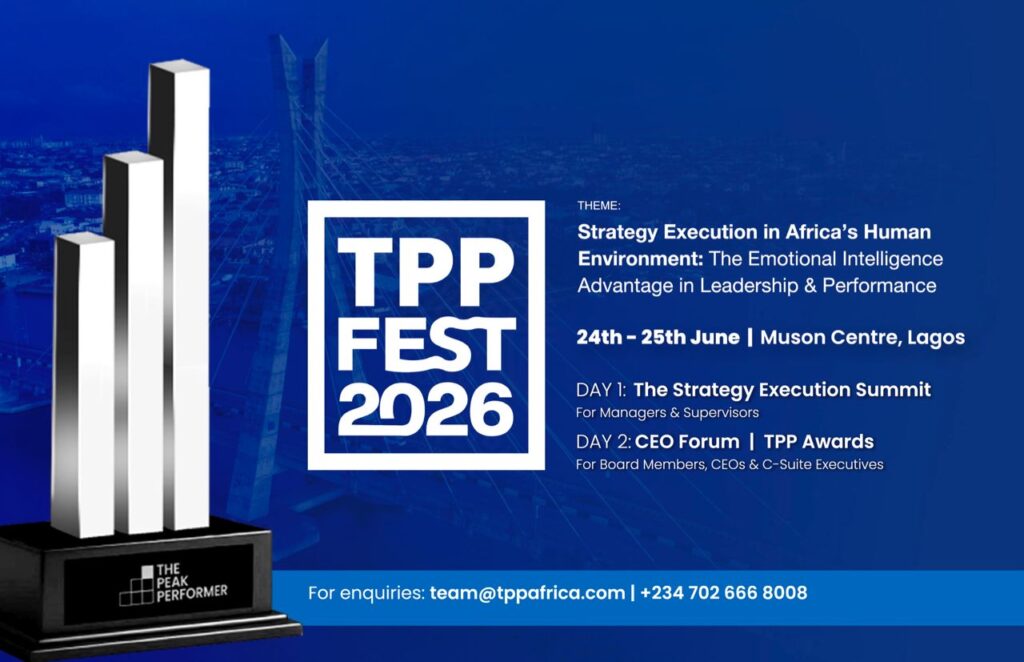
This entire conversation is about a shift. A new way of thinking about performance. The conversation comes alive at TPP Fest 2026 on 24th – 25th June with the theme Strategy Execution in Human Environments: The Emotional Intelligence Advantage in Leadership & Performance.
This platform is designed to serve two clear verticals:
1. Strategy Executors: These are Managers & Supervisors who will be exposed to our proprietary framework The Magic of Emotional Intelligence for daily execution with a focus on behavior, communication and team climate.
2. Strategy Leaders: These are Senior Leaders, C-Suite Executives, Company Directors who will engage with our proprietary framework Taming the Invisible Toll of Leadership Expectations™ with a focus on decision quality, pressure management and organizational energy.
Because the future of leadership will not be defined by how much leaders know. It will be defined by how well they can execute through people and under pressure without losing the people or breaking down.
About Dr. Abiola Salami
Dr. Abiola Salami is the Convener of Dr Abiola Salami International Leadership Bootcamp ; The Peak PerformerTM Festival Made4More Accelerator Program and The New Year Kickoff Summit. He is the Principal Performance Strategist at CHAMP – a full scale professional services firm trusted by high performing business leaders for providing Executive Coaching, Workforce Development & Advisory Services to improve performance. You can reach his team on hello@abiolachamp.com and connect with him @abiolachamp on all social media platforms.
For private coaching, boardroom recalibration, or executive healing strategy, connect email me directly at hello@abiolachamp.com to begin your private Executive Coaching Session.

