
By Dr. Abiola Salami | Worldclass Performance Strategist
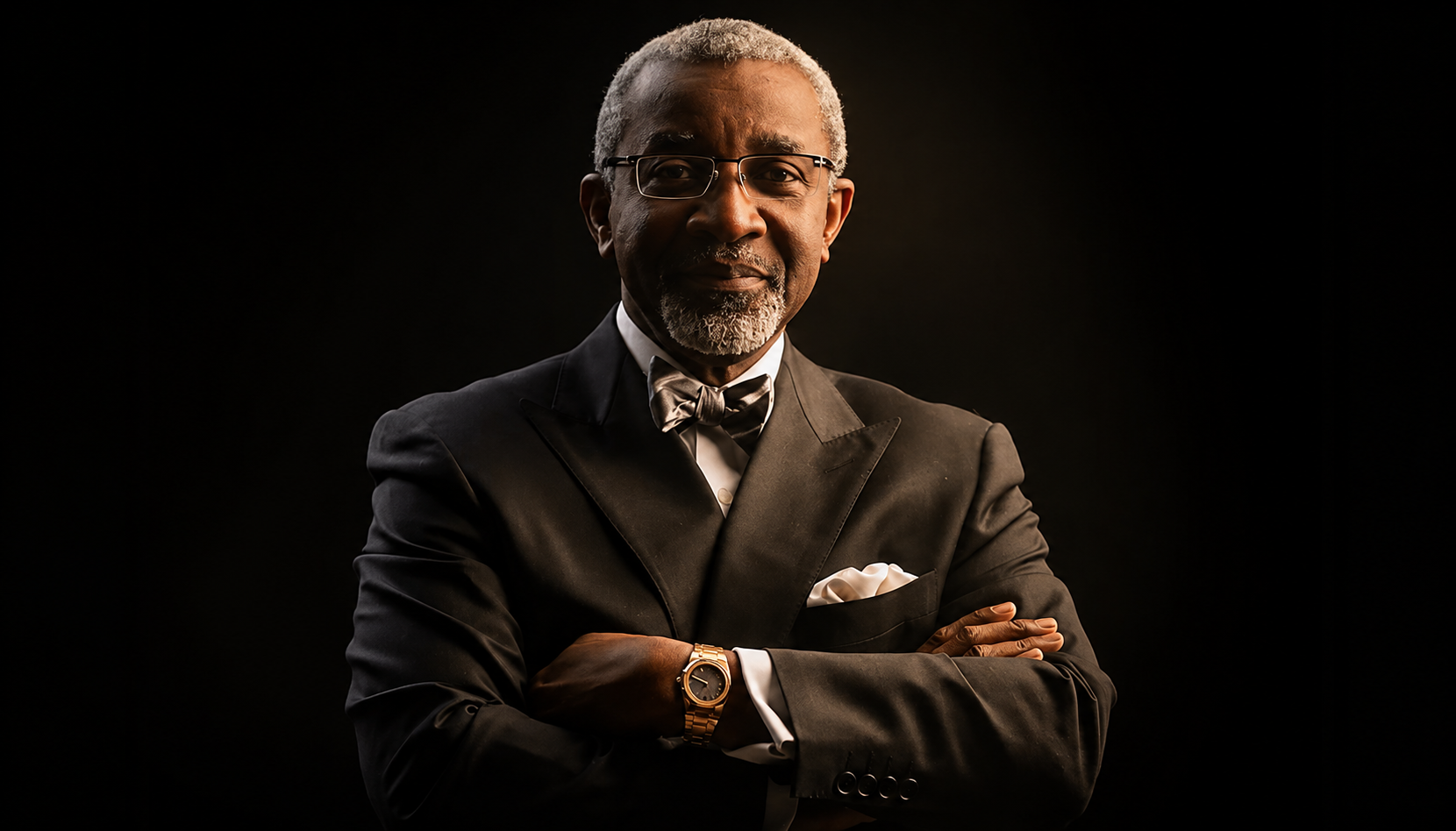
Folusho Philips
The most valuable leaders are not always the most visible. They are the ones institutions trust with their future. – Dr. Abiola Salami
Introduction
We live in an age obsessed with visibility.
Organizations compete for attention, brands compete for attention, professionals compete for attention and leaders compete for attention.
Social media has democratized publicity to such an extent that visibility often appears more valuable than competence. Yet history continues to remind us of a different reality.
The leaders who shape institutions are not always the loudest. The leaders who influence decisions are not always the most visible. And the leaders who leave the deepest imprint are often the ones who spend the least time talking about themselves.
Few careers illustrate this principle more clearly than that of Folusho Phillips.
At first glance, his story appears to be one of corporate leadership and governance. Look closer, and it becomes something more significant. It becomes a lesson in credibility. A lesson in stewardship. And perhaps most importantly, a lesson in the enduring power of quiet influence.
Because in a world increasingly obsessed with visibility, credibility may be becoming the ultimate competitive advantage.
The Leadership Asset Most People Ignore
Most leaders understand two forms of capital. First, Financial Capitali.e.money, assets, investments and tangible resources. Second, Human Capital i.e. knowledge, skills, experience and talent.
These forms of capital matter. Yet there is a third form of capital that receives far less attention despite often determining who gets entrusted with leadership opportunities. I call it: Stewardship Capital.
Stewardship Capital is the confidence people have in your ability to protect, strengthen, and advance institutions. It is what boards look for when selecting directors. It is what investors look for when evaluating governance. It is what organizations seek when navigating uncertainty. And it is what separates leaders who merely occupy positions from leaders who are trusted with legacies.
This is where the story of Folusho Phillips becomes particularly relevant.
Because unlike many influential business leaders whose authority was built primarily through ownership, his influence was built through stewardship, and that distinction matters.
Ownership creates control. Stewardship creates trust. The latter is often far more difficult to earn.
The Quiet Leaders We Often Overlook
Modern society tends to celebrate visible leadership such as founders, celebrities, political figures and public personalities. There is nothing wrong with that.
But it often causes us to overlook another category of leaders. These are the institution builders, boardroom influencers and governance stewards. The individuals whose fingerprints are visible on organizations even when their faces are not.
These leaders rarely dominate headlines. Yet they frequently shape decisions that influence thousands of employees, billions in economic value, and generations of organizational performance.
Across decades of business leadership, board service, governance advocacy, and professional stewardship, Folusho Phillips built a reputation that extended far beyond any single role. His influence did not depend on constant visibility. It depended on credibility. And credibility has a remarkable way of compounding.
The Four Levels of Leadership Value
One reason many leaders struggle to build lasting influence is that they misunderstand what organizations truly value. A useful way to think about leadership is through what I call the Four Levels of Leadership Value.
Level One: Performance
This answers the question, Can you do the job? This is where leadership begins. Organizations need results. Competence matters. Performance matters. Without performance, leadership credibility never gets started.
Level Two: Influence
This answers the question, Can you persuade others? Leadership is rarely a solo activity. Results increasingly depend on the ability to align people, gain commitment, and build momentum. This is where influence becomes important.
Level Three: Credibility
This answers the question, Can people trust your judgment? This is where many leaders separate themselves. Competence may get you promoted. Credibility determines whether people continue to trust your decisions when uncertainty increases.
Level Four: Stewardship
This answers the question, Can people trust you with something larger than yourself? This is the highest level.At this stage, leadership stops being about personal achievement.It becomes about institutional responsibility.This is where governance matters.This is where succession matters.This is where legacy matters.This is where the leadership journey of Folusho Phillips becomes most instructive.Because his career demonstrates that the highest expression of leadership is not authority.It is stewardship.
Governance as a Performance Multiplier
One of the most misunderstood concepts in business is governance. Many people hear the word and immediately think of compliance, policies, committees, board meetings and documentation. The necessary but uninspiring activities.
The best leaders understand something different. They understand that governance is a performance multiplier. Strong governance improves decision quality, improves accountability, improves risk management, improves execution and improves institutional resilience. Weak governance does the opposite.
This matters because organizational success is rarely determined by a single brilliant decision. It is usually determined by hundreds of good decisions made consistently over time. And governance helps make that possible.
This is one reason stewardship-oriented leaders create extraordinary value. They strengthen the systems that produce performance not merely the activities that generate it.
The Visibility Trap
Social media has created the impression that influence can be built between breakfast and lunch. History suggests otherwise. In today’s marketplace, it is possible to become famous before becoming useful. History suggests the reverse sequence is usually more sustainable.
Many professionals now spend significant energy building their profile. Far fewer spend equal energy building their credibility. This creates a dangerous illusion. Because visibility and credibility grow differently.
Visibility can be accelerated but Credibility compounds. Visibility can be purchased but Credibility must be earned. Visibility attracts opportunities but Credibility determines whether those opportunities survive.
In many organizations, promotion is treated as evidence of leadership. Experience however suggests the two occasionally meet, but they are not identical. Some leaders collect titles. Others collect trust. The second group tends to have longer careers.
The Stewardship Premium
Financial markets reward trusted institutions. Investors place a premium on governance quality. Employees remain longer where leadership is trusted. Customers become loyal when organizations demonstrate reliability.
The same principle applies to individual leaders.
Leaders with strong stewardship capital often receive opportunities that competence alone cannot create e.g. board appointments, advisory responsibilities, leadership assignments, strategic influence and more. This is not because they are the loudest, but because they are trusted.
This creates what might be called the Stewardship Premium.
A leader’s reputation begins to generate opportunities independently of active self-promotion. Their credibility compounds, their influence compounds and their stewardship compounds. Over time, trust becomes an asset that continues generating value long after the original investment was made. That is one of the most powerful forms of leadership leverage.
The Quiet Influence Paradox
There is an irony about influence that many leaders fail to recognize. The people who chase influence most aggressively often struggle to achieve it. The people who focus on creating value frequently acquire influence as a by-product.
This pattern appears repeatedly across business, government, and society. Some leaders are known in every room. Others are discussed after they leave the room. The second category is usually more influential.
Why?
Because genuine influence does not depend on presence. It depends on credibility.
People continue to trust your judgment even when you are absent.
People continue to reference your standards even when you are not involved.
People continue to build upon systems you helped create.
That is influence at its highest level.
This is not visibility, this is stewardship.
Beyond Folusho Phillips
The significance of Folusho Phillips’ story extends far beyond any individual career. It raises a broader leadership question. What kind of leaders will the future reward?
Will organizations continue to prioritize visibility over credibility? Will institutions continue to celebrate noise over substance? Or will they increasingly recognize the value of leaders who create trust, strengthen governance, and improve institutional performance?
The future will undoubtedly belong to technology, artificial intelligence, automation, data and digital platforms. Yet beneath every technological transformation lies a fundamentally human reality that trust, judgment, credibility and stewardship still matter.
Because every institution eventually reaches a point where competence alone is insufficient.
At some stage, what matters most is whether people trust leaders with something larger than themselves.
Perhaps that is the enduring lesson from Folusho Phillips’ journey.
The future does not belong exclusively to the loudest leaders. Nor to the most celebrated. Nor even to the most talented. The future belongs to leaders who can be trusted with the future. Because every institution eventually becomes a reflection of the stewardship it has accumulated.
And leaders who understand that principle do more than build organizations. They build confidence. They build trust. They build institutions. And ultimately, they build legacies.
About the Author
Dr. Abiola Salami is a Performance Strategist, Executive Coach, and Governance Thought Leader whose work focuses on leadership effectiveness, strategy execution, institutional performance, and human behavior under pressure. As Founder of The Peak Performer Africa (TPP Africa), he works with executives, boards, public-sector leaders, and organizations across Africa to strengthen leadership capacity and improve performance outcomes. His research and commentary explore the intersection of leadership, execution, governance, and economic development, with a particular interest in the future of African institutions and cities.articular interest in the future of African institutions and cities..
For private coaching, boardroom recalibration, or executive healing strategy, connect email me directly at hello@abiolachamp.com to begin your private Executive Coaching Session.

