
By Dr. Abiola Salami | Worldclass Performance Strategist
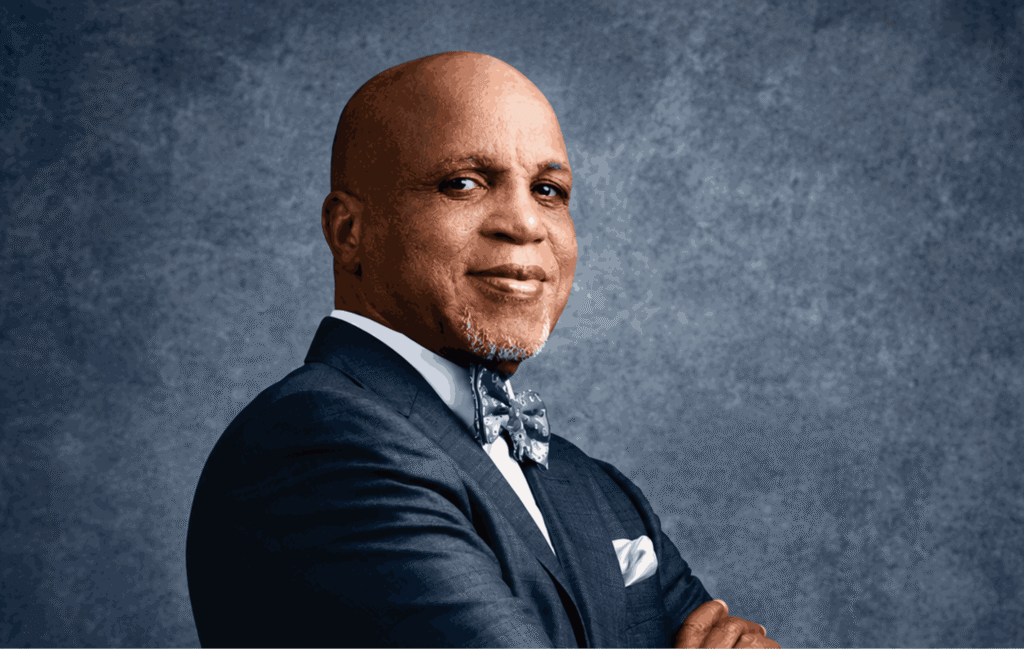
Dr. Biodun Shobanjo
Every institution eventually becomes a reflection of the trust it has accumulated. – Dr. Abiola Salami
Introduction
Nigeria does not suffer from a shortage of talent. It does not suffer from a shortage of ambition. It does not even suffer from a shortage of ideas. What it often suffers from is a shortage of trust. And that shortage may be costing the economy more than most people realize.
When trust is low, businesses spend more time verifying than creating. Governments spend more time defending than executing. Leaders spend more time convincing than leading. The result is a hidden drag on productivity, innovation, investment, and growth. Which is why the story of Biodun Shobanjo is more important than it first appears.
At first glance, it is the story of an advertising executive. Look closer, and it becomes the story of something much bigger in three dimensions (a) the economics of trust (b) the architecture of influence; and (c) the role reputation plays in building institutions that outlive their founders.
The Most Valuable Infrastructure Nobody Talks About
When people discuss infrastructure, they usually think of roads, bridges, railways, ports, power plants, digital networks etc. And rightly so, these assets make economic activity possible.
Yet there is another form of infrastructure that receives far less attention despite being equally important i.e. Trust.
Trust is infrastructure too. Economies move faster when trust exists. Organizations execute faster when trust exists. Partnerships scale faster when trust exists. Capital flows more easily when trust exists.
The opposite is also true. When trust is absent, friction increases; and friction is expensive.
This is one reason why trust has become one of the most valuable economic assets of the modern age. The Edelman Trust Barometer consistently demonstrates that trust influences consumer behavior, employee commitment, investor confidence, and public legitimacy.
In other words, trust does not merely affect relationships. It affects economic outcomes. And that reality sits at the heart of the Biodun Shobanjo story.
Building Influence Before Social Media
Founded in 1979, Insight Communications emerged during a very different era of business when tere was no LinkedIn, no Instagram, no podcasts, no influencers, no viral content and no personal branding consultants teaching people how to become thought leaders in seven easy steps.
At that time, influence had to be earned differently. It was earned through competence, consistency, relationships, results and most importantly, trust.
Over the decades, Insight Communications grew into one of the most influential indigenous marketing communications organizations in Africa, expanding into advertising, public relations, media, experiential marketing, and strategic communications.
The company helped shape some of the most recognizable corporate narratives and brands in Nigeria. Yet perhaps the most impressive achievement was not growth. It was longevity.
The organization remained relevant through military rule, democratic transitions, economic recessions, technological disruption, industry transformation and the rise of the digital age.
Many businesses survive success but far fewer survive change. This distinction matters because surviving change is often the ultimate test of leadership.
Before Personal Branding Became Fashionable
Today’s marketplace offers unprecedented opportunities for visibility. Social media has created the impression that influence can be built between breakfast and lunch. But history suggests otherwise. In today’s marketplace, it is possible to become famous before becoming useful. History suggests the reverse sequence is usually more sustainable.
Many people want to be known but fewer people focus on becoming valuable. Yet influence has always followed usefulness, not the other way around.
One of the most fascinating aspects of Biodun Shobanjo’s journey is that he became influential largely by helping other people and organizations become influential. He built brands, shaped narratives, strengthened reputations, helped businesses communicate value and he invested in institutions.
In many ways, he practiced influence through contribution rather than self-promotion. That distinction is increasingly important in a world where visibility has become abundant and credibility has become scarce.
The Three Assets of Enduring Influence
One of the reasons many leaders struggle with influence is that they misunderstand what influence actually is. They confuse visibility with trust, recognition with credibility and fame with impact. A more useful framework is what I call the Three Assets of Enduring Influence.
Asset One: Visibility
People know you. Marketing creates visibility, publicity creates visibility and social media creates visibility.
Visibility attracts attention but visibility alone rarely changes behavior.
Asset Two: Credibility
People believe you. Credibility is earned through competence, expertise, consistency, and results. Without credibility, visibility becomes noise.
Asset Three: Trust
People are willing to act because of you. Customers buy, investors invest, employees follow, partners commit, trust converts influence into action. And action is where economic value is created.
This is perhaps the most important lesson from Biodun Shobanjo’s journey. Visibility may attract attention. Credibility may create confidence. But trust creates economic value.
The Trust Deficit Tax
One of the least discussed challenges facing organizations, governments, and economies is what might be called the Trust Deficit Tax.
Unlike conventional taxes, it never appears on a balance sheet. Yet institutions pay it every day.
When trust is low, meetings become longer, approvals become slower, bureaucracy expands, supervision increases, innovation declines and execution suffers.
In environments with high trust, people spend energy creating value. But in environments with low trust, people spend energy protecting themselves. The difference is enormous.
Many organizations launch expensive transformation initiatives when the real challenge is trust. Many leadership teams spend years trying to solve productivity problems that are actually credibility problems.
Many executives seek better strategies when what they really need is stronger trust.
This may be one of the most important economic lessons hidden within the story of Biodun Shobanjo. Trust is not merely a communication asset. It is an execution asset.
Reputation Is Compound Interest for Leaders
Perhaps the most powerful insight from Biodun Shobanjo’s journey is that reputation functions much like compound interest.
Most leaders think of reputation as an image issue. It is actually a performance issue. Just as money compounds over time, trust compounds over time. A trusted leader enters a room with advantages. A trusted organization acquires customers more easily. A trusted institution attracts stronger talent. A trusted brand recovers faster from mistakes.
Trust reduces friction. And friction is one of the most expensive hidden costs in business.
Many leaders spend enormous amounts of energy solving problems created by a lack of trust. So they have more meetings, seek more approvals, do more supervision, conduct more verification which often leads to more bureaucracy. However, trust reduces those costs. And over time, the savings become substantial.
In finance, compound interest multiplies money. In leadership, trust multiplies opportunity. Trust may, in fact, be the only asset that appreciates when it is consistently spent.
The Influence Paradox
There is an irony about influence that many people misunderstand. The leaders who chase influence most aggressively often struggle to obtain it. But the leaders who focus on creating value frequently acquire influence as a by-product.
This pattern appears repeatedly throughout history. Influential leaders are rarely influential because they sought admiration. They became influential because they solved important problems. People trusted them because they consistently delivered value.
The same principle applies to organizations. The strongest brands are not built on visibility. They are built on repeated proof. Trust creates preference. Preference creates loyalty. Loyalty creates influence. And influence creates opportunity. Yet none of these can be rushed.
Today, some people measure influence by followers. The challenge is that followers do not automatically become customers. If they did, every viral creator would already be negotiating a banking license by now.
Fortunately, trust operates according to different rules.
Beyond Business
The significance of Biodun Shobanjo’s story extends far beyond advertising, branding, or communications. It speaks to a broader leadership challenge confronting modern organizations. How do leaders build credibility in an age of noise? How do institutions earn trust in an era of skepticism? How do founders build organizations that outlive them? How do leaders create value that survives their direct involvement?
These questions matter because every institution eventually becomes a reflection of the trust it has accumulated.
The future will undoubtedly belong to technology, artificial intelligence, automation and digital platforms. Yet beneath every technological revolution, one principle remains unchanged. People still prefer to do business with people and institutions they trust.
That is why trust remains one of the few competitive advantages that technology cannot fully automate.
Biodun Shobanjo’s journey reminds us that influence is not built by being the loudest voice in the room.
It is built by becoming the most trusted.
Roads deteriorate, buildings age, technologies become obsolete, markets evolve but trust, when consistently earned, compounds across generations.
Perhaps that is why the story of Biodun Shobanjo matters. It is not merely the story of a successful advertising executive. It is the story of what becomes possible when trust is accumulated long enough to become institutional. Because every institution eventually becomes a reflection of the trust it has accumulated. And leaders who understand that principle do not merely build organizations. They build legacies.
About the Author
Dr. Abiola Salami is a Performance Strategist, Executive Coach, and Governance Thought Leader whose work focuses on leadership effectiveness, strategy execution, institutional performance, and human behavior under pressure. As Founder of The Peak Performer Africa (TPP Africa), he works with executives, boards, public-sector leaders, and organizations across Africa to strengthen leadership capacity and improve performance outcomes. His research and commentary explore the intersection of leadership, execution, governance, and economic development, with a particular interest in the future of African institutions and cities.articular interest in the future of African institutions and cities..
For private coaching, boardroom recalibration, or executive healing strategy, connect email me directly at hello@abiolachamp.com to begin your private Executive Coaching Session.

