
By Dr. Abiola Salami | Worldclass Performance Strategist
Introduction
Leadership is often judged by outcomes.
Citizens evaluate roads, transportation systems, economic growth, public services, security, and infrastructure. Investors assess confidence, stability, and returns. Political observers analyze popularity, alliances, and electoral performance.
These measures are important.
Yet they often overlook a critical reality that leadership is experienced differently from the inside than it is observed from the outside.
The public sees decisions, projects, and announcements. Leaders carry the pressure, trade-offs, and consequences that accompany them. What appears straightforward from the outside is often far more complex from within.
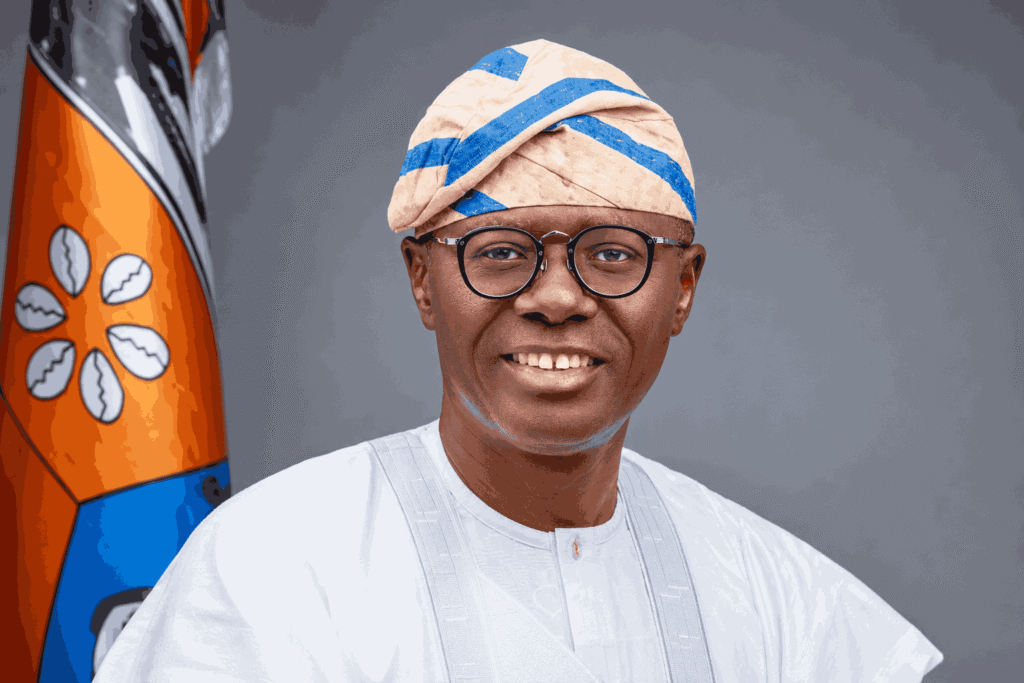
This distinction becomes particularly important when examining the role of Governor Babajide Sanwo-Olu in Lagos State.
Regardless of political affiliation or personal opinion, one reality remains difficult to dispute – governing Lagos represents one of the most demanding leadership assignments on the African continent. This reality offers important lessons for anyone interested in leadership, governance, and performance.
When a City Becomes a System
Many cities are governed. Lagos must be orchestrated. The difference matters.
Modern Lagos is no longer merely a geographical location. It is an economic engine, a commercial hub, a cultural force, a migration destination, and an increasingly complex human system.
Every day, millions of people wake up expecting the city to work.
Businesses expect infrastructure. Investors expect stability. Communities expect services. Young people expect opportunities. Workers expect mobility. Families expect security.
The challenge is that these expectations do not exist independently. They are interconnected.
Transportation affects productivity. Productivity affects economic growth. Economic growth affects employment. Employment affects security. Security affects investment. Investment affects development. Development affects quality of life.
In other words, governing Lagos increasingly requires the ability to understand and manage systems rather than isolated problems.
Governor Sanwo-Olu’s administration provides a practical illustration of this reality.
Projects such as the Lagos Blue Line Rail, investments in water transportation, road expansion initiatives, and the continued implementation of the THEMES development agenda reflect attempts to address multiple interconnected challenges simultaneously. Improving mobility is not merely a transportation objective; it is also an economic, environmental, and quality-of-life objective.
This is perhaps one of the most important leadership realities of our time. The higher the level of leadership, the less leaders manage activities and the more they manage complexity.
Lagos: A City of Ambition and Impatience
Lagos presents a particularly unusual leadership challenge because it is simultaneously a city of ambition and impatience.
People come to Lagos to build, to rise, to compete, to create and to win.
That energy is one of the city’s greatest strengths. It is also one of its greatest pressures. Because a city filled with ambitious people naturally develops ambitious expectations.
Citizens want faster transportation. Businesses want quicker approvals. Investors want certainty. Young people want opportunities. Communities want visible progress. Everyone wants movement; and rightly so.
Yet the speed at which expectations grow often exceeds the speed at which systems can evolve.
This creates one of the defining tensions of modern governance which is balancing urgency with sustainability.
For leaders, that tension never disappears. It must simply be managed.
The Burden of Visible Leadership
One of the paradoxes of leadership is that visibility often increases as understanding decreases. The more prominent the leader, the easier it becomes for observers to underestimate the complexity of the decisions being made.
Most citizens experience government through a specific lens. A commuter experiences traffic. A business owner experiences taxation. A parent experiences education. A patient experiences healthcare. Each perspective is valid. Yet leaders are required to see the entire picture simultaneously.
This creates an often-overlooked burden. Every major decision creates winners and losers. Every budget allocation involves trade-offs. Every policy choice prioritizes one outcome over another. Every delay attracts criticism. Every success raises expectations.
Sanwo-Olu’s tenure illustrates this reality clearly. Infrastructure investments, transportation reforms, urban renewal initiatives, environmental enforcement efforts, and revenue-generation policies have generated both support and criticism from different segments of society.
This is not unique to Lagos. However, the scale and intensity of Lagos magnify these pressures significantly.
The leadership challenge is therefore not simply making decisions. It is making decisions while balancing competing interests, incomplete information, finite resources, and relentless public scrutiny.
Leading Through Disruption
The last several years have reminded leaders around the world that volatility is no longer an exception. It is becoming the norm.
Economic uncertainty, technological disruption, demographic shifts, inflationary pressures, public distrust, and changing citizen expectations have altered the leadership landscape.
Governments are increasingly required to solve problems that do not fit neatly into traditional structures. The same is true for corporations, institutions, and communities.
Today’s leaders require not only technical competence but also emotional resilience. They require strategic thinking and operational discipline. They require the ability to communicate confidence without denying reality. Perhaps most importantly, they must maintain effectiveness under sustained pressure.
Sanwo-Olu’s administration has had to navigate disruptions ranging from the COVID-19 pandemic and its economic consequences to the social and political tensions surrounding the EndSARS protests and their aftermath. These events tested not only administrative capacity but also crisis management, public communication, and institutional resilience.
This is where leadership becomes less about authority and more about endurance.
The Invisible Cost of Expectations
One of the least discussed aspects of leadership is the emotional burden created by expectations. The higher leaders rise, the more people depend on them.
Employees depend on CEOs. Citizens depend on governors. Investors depend on policymakers. Families depend on parents. Teams depend on managers. The challenge is that dependence often creates isolation.
People frequently look to leaders for answers while rarely considering the weight of responsibility carried by those same leaders.
Leadership therefore involves more than strategy and execution. It also involves absorbing pressure. The pressure of uncertainty. The pressure of criticism. The pressure of competing demands. The pressure of public visibility. The pressure of knowing that every decision affects real lives.
For leaders operating in environments as demanding as Lagos, these pressures are not occasional. They are continuous.
The Leadership Tax Few People Discuss
There is another reality of leadership that receives far less attention than it deserves. Every significant leadership role carries what I describe in my book Taming the Invisible Tool of Leadership Expectation as Leadership Tax.
The higher the office, the heavier the tax. For some leaders, the tax is privacy. For others, it is time. For others, it is relationships, emotional energy, personal freedom, or peace of mind.
The public often sees the benefits of leadership but leaders experience the cost. In environments as complex as Lagos, that tax is paid daily. Every decision attracts scrutiny. Every delay generates criticism. Every success creates new expectations. Every challenge becomes personal.
The result is that leadership at scale is rarely sustained by competence alone. It requires emotional stamina. This may be one of the least appreciated realities of modern governance that many leadership failures are not failures of intelligence. They are failures of endurance.
The challenge is not always knowing what to do. The challenge is sustaining the clarity, discipline, and resilience required to keep doing it under pressure.
Why Complexity Changes Leadership
As institutions grow, complexity becomes the dominant leadership challenge. At smaller scales, effort often produces results. At larger scales, systems produce results.
Many leadership failures occur because individuals attempt to solve systemic problems with individual effort. They work harder when they should think differently. They increase activity when they should improve coordination. They pursue visibility when they should strengthen systems.
Cities such as Lagos remind us that sustainable progress rarely depends on heroic leadership. It depends on institutional leadership. The strongest leaders are often those who build structures capable of delivering results beyond their personal involvement.
That is why leadership at this scale is ultimately a team sport.
While public attention naturally focuses on the Governor, progress is often the product of thousands of public servants, commissioners, agency leaders, civil servants, private-sector partners, and citizens working together. The complexity of Lagos means that no individual, regardless of talent or vision, can govern effectively alone.
This reality may be one of the most overlooked lessons of modern leadership. The most effective leaders do not merely pursue personal achievements; they create alignment, build capable teams, strengthen institutions, and enable others to perform at their best. In highly complex environments, sustainable progress is rarely the result of individual brilliance. It is the outcome of coordinated effort across an entire system.
The Lagos experience reminds us that leadership is not simply about directing people. It is about creating the conditions under which diverse stakeholders can work toward a common objective despite competing priorities, limited resources, and constant change.
Beyond Politics
The story of Lagos is ultimately larger than any individual leader.
Governors will come and go. Administrations will change. Political conversations will evolve. Yet the leadership questions remain.
How do leaders perform under relentless scrutiny?
How do they make decisions amid uncertainty?
How do they sustain execution while managing competing interests?
How do they maintain clarity when complexity continues to grow?
Sanwo-Olu’s experience governing Lagos offers a useful lens through which to examine these questions.
Whether one views his record favorably or critically, his administration has confronted the realities of managing a megacity through infrastructure expansion, transportation modernization, economic pressures, public health challenges, and intense public scrutiny.
The lessons extend far beyond government. They apply to CEOs, entrepreneurs, managers, board members, and professionals across every sector.
Perhaps the most important lesson from Lagos is that peak performance is not the absence of pressure. It is the capacity to function effectively within it.
The world often celebrates leaders when conditions are favorable. Yet true performance reveals itself when circumstances become difficult, expectations rise, and complexity increases.
In that sense, Lagos may be one of Africa’s greatest leadership classrooms. Because every day it reminds us that excellence is not measured by comfort. It is measured by the ability to keep moving forward despite complexity.
The Lagos experience highlights five enduring leadership principles:
- Think in systems, not silos.
- Accept and communicate trade-offs.
- Build institutions that outlast individuals.
- Pair competence with resilience.
- Balance immediate demands with long-term value creation.
These lessons matter because the future belongs to leaders who can manage complexity without becoming overwhelmed by it. And few environments teach that lesson more vividly than Lagos.
Because in the end, leadership is not tested by the weight of the burden. Leadership is tested by what continues to move forward while carrying the burden. In a city as demanding as Lagos, that may be the most important leadership lesson of all.
About the Author
Dr. Abiola Salami is a Performance Strategist, Executive Coach, and Governance Thought Leader whose work focuses on leadership effectiveness, strategy execution, institutional performance, and human behavior under pressure. As Founder of The Peak Performer Africa (TPP Africa), he works with executives, boards, public-sector leaders, and organizations across Africa to strengthen leadership capacity and improve performance outcomes. His research and commentary explore the intersection of leadership, execution, governance, and economic development, with a particular interest in the future of African institutions and cities..
For private coaching, boardroom recalibration, or executive healing strategy, connect email me directly at hello@abiolachamp.com to begin your private Executive Coaching Session.

