
By Dr. Abiola Salami | Worldclass Performance Strategist
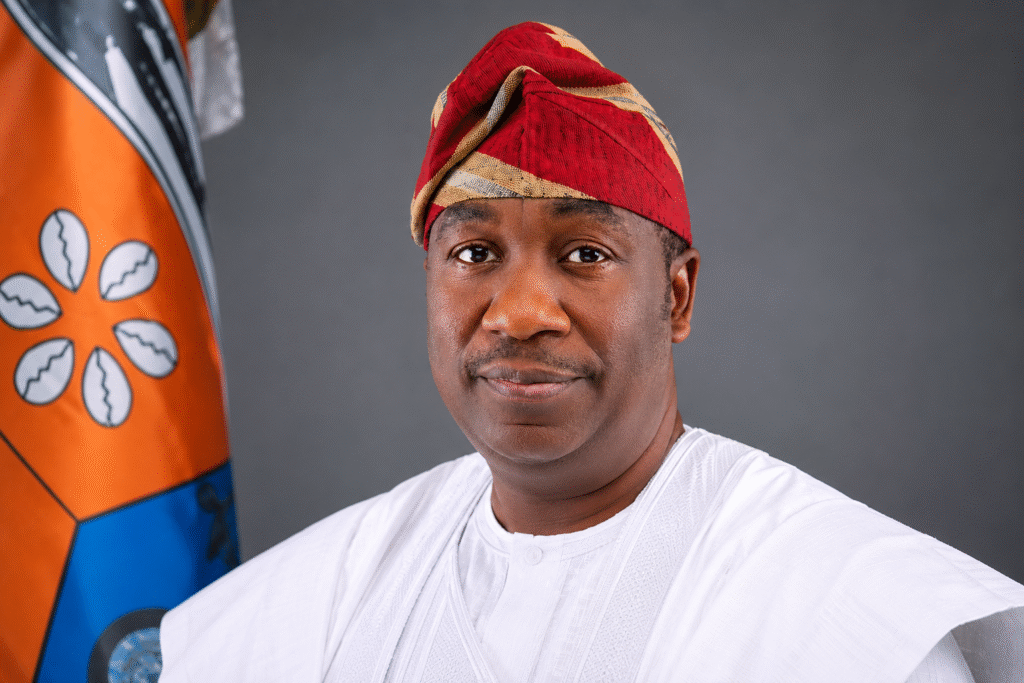
Dr. Obafemi Hamzat
The most important leadership question is not whether a leader can win an election. It is whether the leader is prepared for the complexity that follows victory. – Dr. Abiola Salami
Introduction
Leadership transitions are among the most consequential moments in the life of any institution.
Nations experience them, organizations experience them and cities experience them.
The reason is simple.
Transitions reveal a question often hidden during periods of stability: Who is prepared to carry the responsibility of what comes next?
That question has become increasingly relevant with the emergence of Dr. Obafemi Hamzat as the APC gubernatorial candidate for Lagos State.
Public conversations will naturally focus on politics. They will focus on campaigns. They will focus on elections.
Those conversations are important. Yet beneath the political conversation lies a deeper leadership question: What kind of leader does the next Lagos require?
Because the Lagos of tomorrow will not be governed by the same assumptions that shaped the Lagos of yesterday. And that changes everything.
Lagos Is No Longer Just a State
Lagos is often described as Nigeria’s commercial capital. That description is accurate, but inadequate.
Lagos is now an economic system, a migration magnet, a cultural engine, a technology hub, a logistics corridor, a financial centre, and a governance stress test. It is a state that behaves like a country.
With an estimated population above 20 million by state figures, over 5 million vehicles on its roads, and one of the largest subnational economies in Africa, Lagos carries a burden far beyond its landmass.
Its internally generated revenue reached ₦815.86 billion in 2023, according to the National Bureau of Statistics. By 2024, Lagos announced record IGR of about ₦1.3 trillion. In 2025, the state reported total revenue of about ₦2.6 trillion, with IGR rising to about ₦1.87 trillion.
These numbers matter. They show fiscal strength; but they also reveal pressure.
Because the more Lagos earns, the more Lagos is expected to deliver more roads, better transport, cleaner drainage, affordable housing, safer communities, smarter technology, stronger institutions and faster services.
Citizens rarely compare government performance with budget lines. They compare it with daily experience.
If traffic is unbearable, GDP does not comfort them. If rent becomes impossible, revenue growth does not inspire them. If floods destroy homes, policy documents do not console them.
This is the paradox of Lagos. Its success creates higher expectations. And higher expectations create heavier leadership demands.
The New Lagos Challenge
The next Lagos will be defined by five major pressures.
First, mobility.
Traffic in Lagos is not merely an inconvenience. It is a productivity issue, a health issue, a competitiveness issue, and a quality-of-life issue.
Second, housing.
As population growth, construction costs, land prices, and migration pressure intensify, the housing question is becoming one of the most urgent social and economic issues in the state.
Third, climate and flooding.
Lagos is a low-lying coastal megacity. Flooding, poor drainage, waste disposal, coastal erosion, and unregulated development are not environmental side issues. They are existential governance issues.
Fourth, waste and sanitation.
The World Bank has noted that Lagos struggles with low waste collection rates and limited recycling, creating environmental, health, and infrastructure challenges.
Fifth, economic competitiveness.
Lagos must compete not only with Abuja, Ogun, Rivers, and other Nigerian states, but increasingly with African and global cities seeking talent, capital, tourists, technology, logistics, and enterprise.
This is why the next governor of Lagos will not simply be managing departments. He will be managing systems.
Lagos in Global Perspective
To understand Lagos properly, one must compare it not only with Nigerian states but with high-pressure global economic regions.
California has nearly 40 million people and a GDP above $4 trillion, making it one of the largest subnational economies in the world. New York State has nearly 20 million people and GDP above $2 trillion. Guangdong Province in China, with about 127 million people, is China’s largest provincial economy, with output above $2 trillion.
These places are much richer than Lagos but the comparison is still useful. Why?
Because they show what happens when subnational governments become engines of national competitiveness.
California is not just a state. It is an innovation economy. New York is not just a state. It is a financial and cultural gateway. Guangdong is not just a province. It is an industrial and export machine.
Lagos is not yet operating at that level of scale or income. But its leadership challenge is moving in that direction. It must therefore think like a state, act like a megacity, compete like an economic region, and govern like a system. That is a very different leadership demand.
Why Hamzat’s Background Matters
Leadership is never guaranteed by pedigree. Degrees are not governance. Experience is not execution. Exposure is not performance. Yet, background matters because it shapes instinct.
Dr. Obafemi Hamzat’s career sits at the intersection of engineering, technology, infrastructure, and public administration. That combination is relevant because Lagos’ next phase will reward systems thinking.
An engineer is trained to ask:
What is the structure?
Where is the constraint?
What is the failure point?
How do the parts connect?
That mindset matters in a city where transport affects productivity, productivity affects income, income affects housing, housing affects commuting, commuting affects health, and health affects economic output.
Lagos does not need leaders who only see problems. It needs leaders who understand interdependence.
Leadership Readiness Capital
Most people understand financial capital. Many understand human capital. Fewer understand what might be called Leadership Readiness Capital.
Based on my learning on leadership performance, Leadership Readiness Capital is the accumulation of experience, judgment, relationships, institutional memory, emotional stamina, and systems awareness that prepares a leader for greater responsibility.
It develops before authority arrives. It develops through exposure, pressure, observation, mistakes and proximity to complexity.
This is why Hamzat’s time in government matters. As Commissioner and Deputy Governor, he has had the advantage of seeing Lagos from inside the machinery of government.
He has seen how policy becomes implementation, how budgets become projects, how agencies interact, how public expectations rise, how execution breaks down and how complex the Lagos system really is.
Of course, that does not guarantee future success but it improves readiness. And in a city like Lagos, readiness matters.
The Four Dimensions of Leadership Readiness
The next Lagos will require four kinds of readiness.
1. Operational Readiness
Can the leader understand how government actually works? Not in theory but in practice. Policy without execution is decoration. Lagos needs leaders who understand implementation.
2. Strategic Readiness
Can the leader balance urgent problems with long-term transformation? The daily pressure of Lagos can easily consume any administration e.g. traffic shouts, flooding shouts, housing shouts and security shouts. But great leadership must hear the noise without losing the future.
3. Stakeholder Readiness
Can the leader align competing interests? Citizens want relief. Businesses want efficiency. Investors want certainty. Communities want inclusion. Regulators want compliance. Civil servants want stability. In Lagos, leadership is not about pleasing everyone. It is about managing trade-offs with intelligence and fairness.
4. Emotional Readiness
Can the leader function under pressure? Lagos is not a quiet assignment. Every delay becomes news. Every project attracts scrutiny. Every decision produces reactions. Every success creates new expectations. Leadership in Lagos requires more than competence. It requires stamina.
The Execution Question
Lagos has many plans. The THEMES agenda, The Lagos State Development Plan 2052, rail projects, road projects, housing programmes, digital governance initiatives, climate resilience plans, economic development strategies.
The issue is no longer whether Lagos has ambition. The issue is execution. And execution in Lagos is difficult because every solution creates new pressure. Build rail, and people ask about last-mile transport. Build roads, and traffic patterns change. Expand housing, and land questions intensify. Improve revenue, and citizens demand better services. At this level, leadership becomes less about announcements and more about coordination. Because Lagos does not suffer from a shortage of activity. It suffers when activity is not properly aligned.
Leadership Is a Team Sport
One of the most important realities of governing Lagos is that leadership at scale is ultimately a team sport. Public attention naturally focuses on the governor. Yet progress is often produced by thousands of public servants, commissioners, agency leaders, civil servants, private-sector partners, investors, communities, and citizens working together.
No individual, regardless of intelligence or vision, can govern Lagos alone. The most effective leaders do not merely pursue personal achievements. They build alignment. They strengthen institutions. They empower capable teams. They create systems that continue to deliver beyond their personal involvement.
In complex cities, sustainable progress is rarely the result of individual brilliance.
It is the result of coordinated execution.
Beyond Politics
The significance of Obafemi Hamzat’s emergence is therefore larger than electoral politics. It invites a broader conversation about leadership readiness. How do cities prepare future leaders? How do governments preserve institutional memory? How do leaders convert experience into judgment? How do administrations maintain continuity without becoming stagnant? How does Lagos move from megacity pressure to model-city performance?
These are not political questions alone. They are leadership questions. And they matter because Lagos is no longer competing only with Nigerian states. It is competing with global cities for capital, talent, technology, tourism, logistics, and confidence.
The future of Lagos will not be shaped by slogans. It will be shaped by execution.
It will be shaped by systems. It will be shaped by leadership that can manage complexity without becoming overwhelmed by it.
Perhaps that is the most important lesson from this moment. The future does not belong simply to leaders who seek responsibility. It belongs to leaders who have prepared for it.
Because in the end, leadership is not defined by the moment authority arrives. It is defined by everything that happened before it. And in a city as consequential as Lagos, readiness may be the difference between governing activity and governing transformation.
About the Author
Dr. Abiola Salami is a Performance Strategist, Executive Coach, and Governance Thought Leader whose work focuses on leadership effectiveness, strategy execution, institutional performance, and human behavior under pressure. As Founder of The Peak Performer Africa (TPP Africa), he works with executives, boards, public-sector leaders, and organizations across Africa to strengthen leadership capacity and improve performance outcomes. His research and commentary explore the intersection of leadership, execution, governance, and economic development, with a particular interest in the future of African institutions and cities.articular interest in the future of African institutions and cities..
For private coaching, boardroom recalibration, or executive healing strategy, connect email me directly at hello@abiolachamp.com to begin your private Executive Coaching Session.

