
By Dr. Abiola Salami, Worldclass Performance Strategist
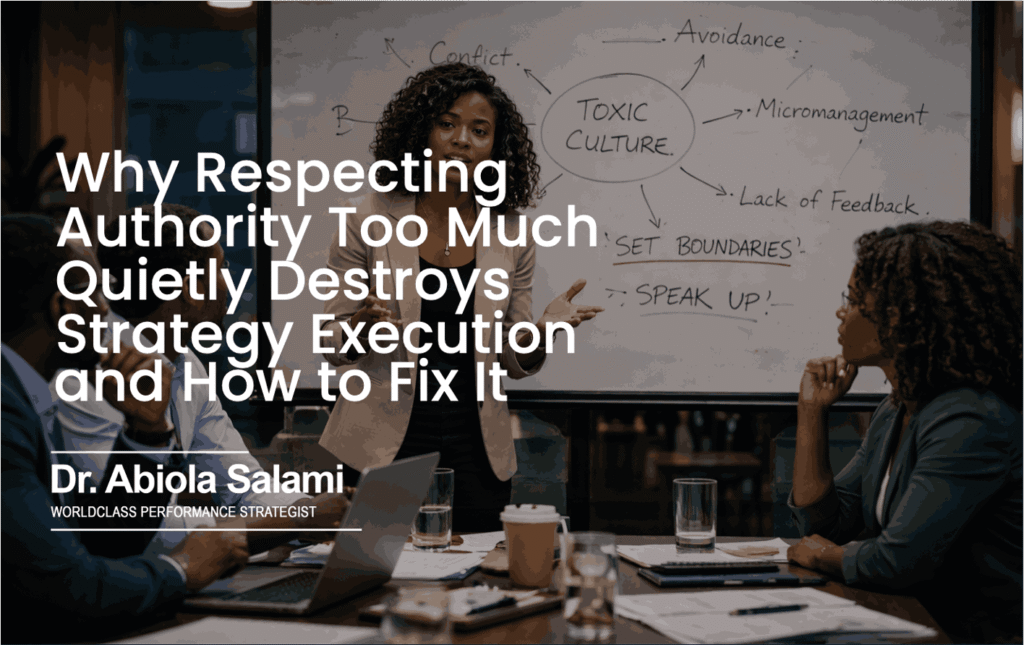
Introduction
Respect is one of the most celebrated values in organizations. Respect for leadership. Respect for hierarchy. Respect for experience.
It creates order. It preserves structure. It maintains discipline. But there is a point where respect quietly crosses a line.
It stops being a strength and becomes a constraint. Because when respect becomes excessive, it begins to distort how strategy is discussed, challenged, and ultimately executed.
When Respect Starts Editing Reality
In most organizations, nobody announces that people should hold back.
There is no policy that says, “Do not challenge leadership.” There is no formal rule that says, “Keep your concerns to yourself.”
And yet, it happens because culture does not need instructions. It only needs signals.
People watch how leaders respond to questions. They observe how dissent is received. They notice who gets rewarded and who gets avoided. And over time, they learn something powerful: Respect is safest when it is quiet.
So before speaking, people begin to filter themselves. “Is this too direct?”
“Will this be misunderstood?” “Should I just align?”
And just like that, respect begins to edit reality in the room.
How This Affects Strategy Execution
Strategy is not just built on ideas. It is built on the quality of conversation around those ideas. And when respect interferes with that conversation, three things happen:
1. Strategy Leaves the Room Incomplete
A strategy is only as strong as the questions it survives. But when respect limits questioning, assumptions remain untested, risks remain unexplored and alternatives remain unspoken.
The strategy may look complete but it has not been fully examined. And what is not examined in the room will be exposed in execution.
2. Execution Is Based on Partial Truth
Leaders depend on honest signals from the organization but in high-deference environments, those signals are filtered. Challenges are softened, delays are reinterpreted and gaps are disguised.
This is not because people are dishonest but because they are careful. Careful not to disrupt. Careful not to offend. Careful not to appear misaligned. And over time, leaders begin executing strategy on a version of reality that is incomplete.
3. Corrections Come Too Late
Execution is not about getting everything right. It is about adjusting quickly. But when respect delays honest feedback, small issues travel. They move from discussion to decision to implementation before they are challenged.
And by the time they are exposed, time is lost, resources are spent and momentum is broken. What should have been a small correction becomes a strategic setback.
When Intelligence Goes Silent
In these environments, intelligence does not disappear. It withdraws. People still see the gaps.
They still recognize the risks. They still have better ideas. But they no longer express them freely because they have learned that challenging upward feels risky, asking tough questions feels uncomfortable and disagreeing feels like crossing a line.
So they adapt. They speak carefully. They align quickly. They avoid tension. And in doing so, they remove the very input that makes execution stronger.
The Cost of Respect-Driven Silence
In one organization, a major initiative was approved with full leadership support. Resources were allocated.
Teams were mobilized. Execution had begun. But one team member had seen a flaw early. A misalignment between market reality and internal assumptions.
He said nothing. Not because he didn’t understand. But because he didn’t want to challenge the direction. Weeks later, the issue surfaced. By then, time had been lost, costs had increased and confidence had dropped.
And what could have been corrected in a conversation had to be corrected in execution.
How Leaders Accidentally Reinforce This Culture
This culture is rarely intentional; it is often reinforced.
A sharp response to a question. A subtle dismissal of dissent. A preference for agreement over debate. People observe and they adjust. So next time they speak less, they question less, they challenge less until eventually execution carries the weight of what was never said.
The Leadership Paradox
Leaders need respect but they also need resistance. They need alignment but they also need challenge because without challenge, assumptions remain weak, blind spots remain hidden and execution remains vulnerable.
The goal is not to reduce respect. It is to mature it from silent agreement to intelligent engagement.
Where Execution Begins to Improve
In high-performing environments, something different happens. Respect still exists but it does not silence truth.
People can say “I see a risk.” “I think we are missing something.” “Can we challenge this assumption?”
And those moments are not seen as disruption, they are seen as contribution because in those environments, leaders understand that execution improves when people can think out loud not just comply out loud.
A Conversation Leadership Rarely Has
As leaders rise, something subtle changes. They gain more authority and receive more respect but they also become more insulated; not by intention but by environment.
And this creates a dangerous gap between what leaders believe is happening and what is actually unfolding during execution.
A Quiet Shift Is Emerging
There is a growing recognition among senior leaders that many execution failures are not strategic; they are human. They are rooted in moments where authority was respected but not engaged. Where concerns were felt but not expressed. Where truth was known but not spoken.
And increasingly, a different kind of leadership conversation is beginning to take shape. One that moves beyond agreement into examination.
A Quiet Invitation to Rethink Execution
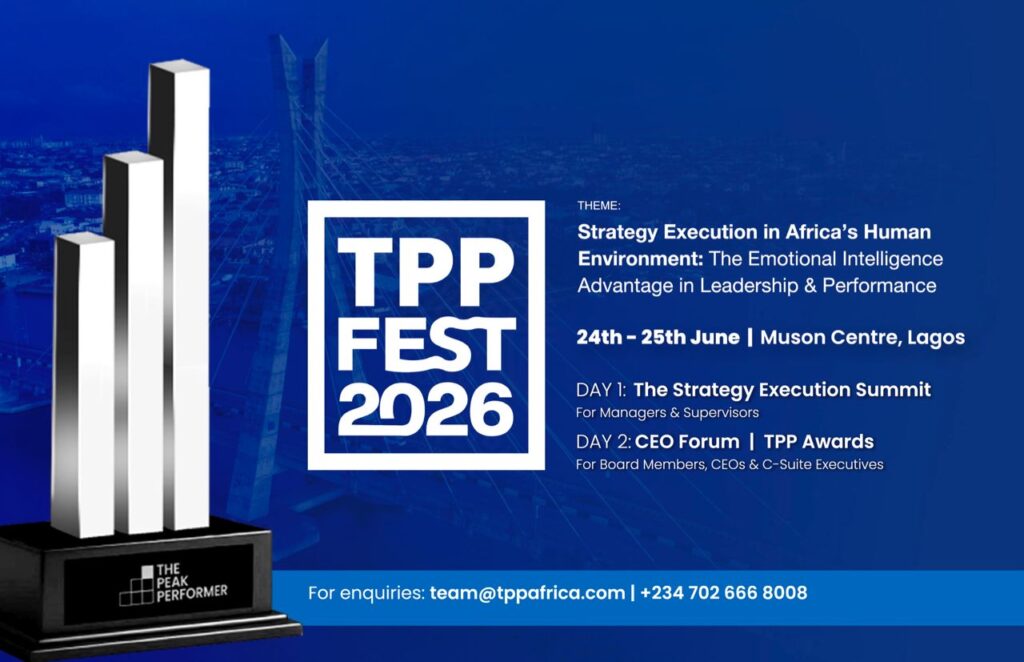
In June, a select group of senior leaders will step into that kind of conversation; not to defend strategy but to examine what is quietly weakening its execution.
This won’t be about presentations or polished narratives but through the kind of honest reflections that rarely surface in traditional leadership environments because at that level of leadership, the issue is rarely capability, it is exposure.
It is about exposure to truth, exposure to tension and exposure to perspectives that do not automatically agree.
And until that exposure is restored, even the best thought out strategies will continue to carry unseen risks into execution.
Final Thought
Respect is essential but when it silences intelligence, it becomes expensive because in the end strategy execution does not fail because people don’t know what to do. It fails because the human environment in the organization is challenged.
The organizations that will consistently win will not be the ones with the strongest authority but the ones where truth can travel upward without fear.
About Dr. Abiola Salami
Dr. Abiola Salami is the Convener of Dr Abiola Salami International Leadership Bootcamp ; The Peak PerformerTM Festival Made4More Accelerator Program and The New Year Kickoff Summit. He is the Principal Performance Strategist at CHAMP – a full scale professional services firm trusted by high performing business leaders for providing Executive Coaching, Workforce Development & Advisory Services to improve performance. You can reach his team on hello@abiolachamp.com and connect with him @abiolachamp on all social media platforms.
For private coaching, boardroom recalibration, or executive healing strategy, connect email me directly at hello@abiolachamp.com to begin your private Executive Coaching Session.

