
Dr. Abiola Salami calls for a shift from counting women in the room to examining whether women have the opportunity, influence and institutional support to contribute at full capacity.
Introduction
Women’s representation in leadership is an important part of the conversation about gender and opportunity. But representation alone cannot tell us whether women are able to exercise influence, advance professionally, access meaningful opportunities or contribute fully to organisational performance.
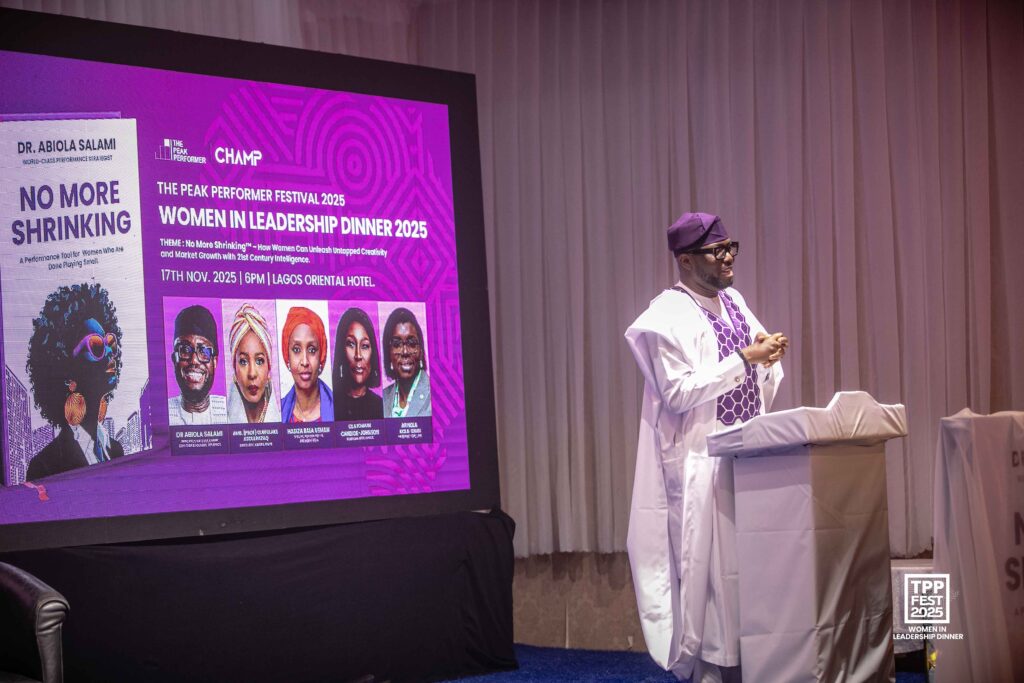
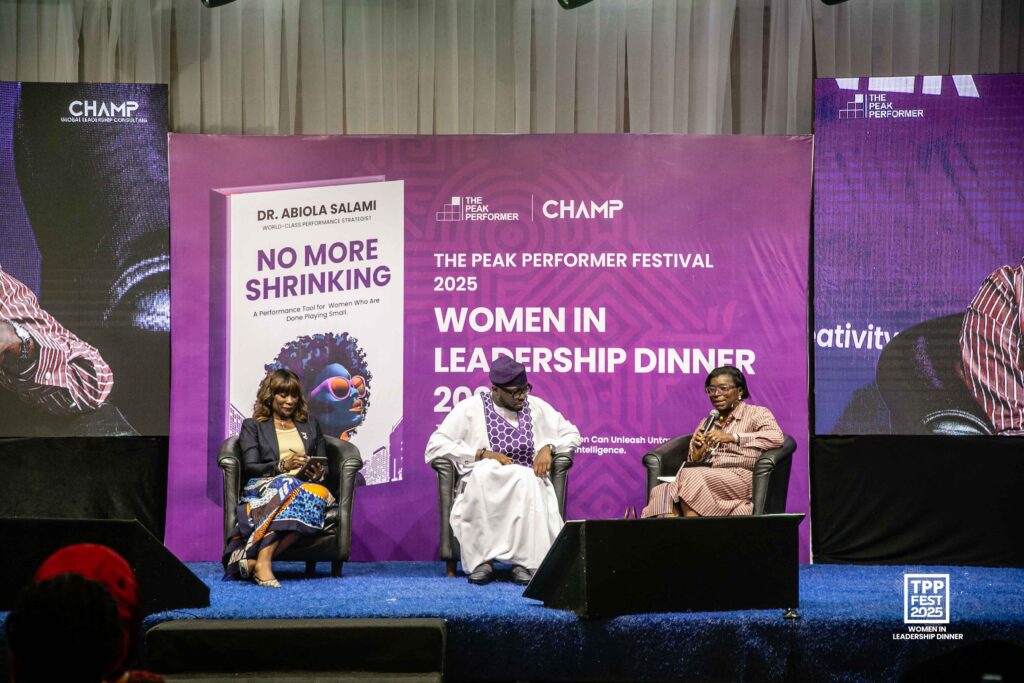
For the Principal & Founder of CHAMPÒ Global Leadership Consulting, Dr. Abiola Salami, this is the question behind NO MORE SHRINKING® — The Full Capacity Experience, which will take place on 20 November 2026 in Lagos.
Ahead of the unveiling of the No More Shrinking® Full Capacity Report, Salami discusses the difference between representation and utilisation, the institutional barriers that can constrain women, and why female capacity should be treated as a leadership and performance priority.
Q: Why are you asking whether Nigeria is fully utilising female capacity rather than simply asking whether more women are represented?
Dr. Abiola Salami: Representation is important, but it is not the end of the conversation.
A woman may be employed without being given meaningful opportunities to lead. She may occupy a senior position without having the influence required to shape important decisions. She may be highly capable but repeatedly overlooked for assignments that build visibility, experience and readiness for advancement.
We need to examine what happens after a woman enters an organisation or reaches a leadership position. Does she have access to opportunity? Can she contribute her ideas? Is her expertise taken seriously? Does she have the authority, resources and support required to deliver? Are there credible pathways for advancement?
Female capacity utilisation asks us to look beyond presence and examine contribution, influence, opportunity and the conditions that enable women to perform.
The central question is not simply, “Are women present?” It is, “Are women able to contribute fully?”
Q: What do you mean by female capacity?
Dr. Salami: Female capacity includes women’s knowledge, skills, judgement, experience, creativity, leadership potential, relationships and ability to solve problems and create value. But capacity is not expressed in a vacuum. It depends partly on the environment in which a person operates.
An organisation may recruit highly capable women and still fail to benefit fully from their capabilities if its culture discourages dissent, its promotion systems lack transparency, its allocation of opportunities is uneven or its leadership pipeline does not prepare women for more demanding roles.
We must therefore examine both individual capability and institutional conditions. It would be unfair and analytically incomplete to place the entire burden of change on women while ignoring the systems that determine who gets opportunities and whose contributions are recognised.
Q: Does this mean the progress made on women’s representation has not been enough?
Dr. Salami: It means representation and utilisation are different questions, and both
deserve attention. Representation tells us who is present. Utilisation asks whether the conditions exist for people to contribute their capabilities meaningfully.
Progress in representation should be recognised, but it should also prompt us to examine the quality of participation and the pathways that follow. Are women being entrusted with consequential responsibilities? Are they included in strategic conversations? Are they being prepared for executive and board roles? Do performance evaluations and promotion decisions consistently recognise their contributions?
We should not assume that the existence of a few visible success stories means the system works equally well for everyone. Nor should we assume that every woman has the same experience.
The task is to investigate the evidence, identify where barriers exist and determine what institutions can change.
Q: What kinds of institutional barriers should organisations be examining?
Dr. Salami: They should examine the entire employee and leadership journey. That includes recruitment, access to stretch assignments, mentoring and sponsorship, performance evaluation, promotion, pay and reward, leadership development, succession planning and retention.
They should also examine how influence operates in practice. Who gets invited into important conversations? Whose recommendations receive serious consideration? Who is trusted with high-stakes assignments? Who is identified as ready for promotion, and what evidence supports that judgement?
Workplace culture matters as well. If women believe that speaking up will carry a disproportionate personal cost, or that they must constantly prove their competence in ways their peers do not, their participation may be constrained even when formal policies appear inclusive.
These issues should not be presumed to exist in every organisation. They should be examined systematically rather than dismissed or assumed.
Q: What responsibility rests with women themselves, and what responsibility rests with institutions?
Dr. Salami: Women should be supported to develop their capabilities, articulate their value, build professional relationships, seek consequential opportunities and make informed decisions about their careers. But individual agency cannot substitute for institutional responsibility.
Organisations control many of the structures through which opportunities are allocated, performance is evaluated, leadership readiness is assessed and promotions are made. They therefore have a responsibility to examine whether these systems are fair, transparent and effective.
Leaders should ask whether their organisations identify talent consistently, give capable people meaningful opportunities, address inappropriate behaviour and build credible pathways to senior responsibility.
The aim is not to remove standards or lower expectations. It is to ensure that standards are relevant, opportunities are accessible and performance is evaluated fairly.
Women should not have to choose between developing their capacity and navigating avoidable institutional barriers.
Q: How does this issue affect organisational performance and not just gender equality?
Dr. Salami: The two are connected, although we should be careful not to reduce women’s value to the financial benefit they may generate for an organisation.
When capable people are denied opportunities to contribute, organisations risk losing ideas, experience, problem-solving ability and leadership potential. When advancement systems do not identify and develop talent effectively, the leadership pipeline becomes narrower than it needs to be.
Better utilisation of female capacity can strengthen talent development, succession planning, decision-making and organisational adaptability. But these outcomes should be examined rather than assumed.
There is also a fundamental question of institutional integrity: if an organisation says it values merit and performance, does it have systems that allow capable people to demonstrate their merit and be recognised for their contribution?
The performance question is therefore not whether women deserve a special exemption. It is whether institutions are making full and fair use of the talent available to them.
Q: What is the No More Shrinking® Full Capacity Report intended to achieve?
Dr. Salami: The report is intended to bring a more structured, evidence-informed perspective to the conversation about female capacity in Nigeria’s workplace and marketplace.
Rather than relying only on anecdotes or general statements about women’s advancement, we want to examine the experiences, barriers, opportunities and institutional conditions that shape whether women can contribute fully.
The assessment underpinning the report is currently underway. We will present its findings when the work is ready; it would be premature to announce conclusions before that process is complete.
Our ambition is to make the conversation more specific. What should organisations examine? Where might opportunities be constrained? What decisions can leaders take? What indicators would help us determine whether conditions are improving?
A report should not merely describe a problem. It should help people decide what to do about it.
Q: How will the Full Capacity Experience move beyond another women’s empowerment event?
Dr. Salami: The intention is to move from conversation to diagnosis, from diagnosis to decision, and from decision to follow-through.
NO MORE SHRINKING® — The Full Capacity Experience is designed around the sequence of Data → Diagnosis → Decision → Full Capacity → 90-Day Follow-Through.
The morning will bring women and institutions into a focused conversation about female capacity. It will include my keynote, The State of Female Capacity Utilisation in Nigeria, and the unveiling of the No More Shrinking® Full Capacity Report, alongside recognition of women and institutions advancing female capacity.
The emphasis is not only on inspiration. It is on helping participants identify what needs to change and what actions they can take after the event.
We want individuals to leave with decisions they can act on, and institutions to recognise that advancing female capacity requires more than statements of support.
Q: What should a CEO or board chair do immediately after hearing this argument?
Dr. Salami: Start with the evidence available within the organisation. Examine the gender distribution across levels of responsibility, the allocation of high-visibility assignments, promotion and succession outcomes, access to leadership development, retention patterns and employee experiences.
Look beyond headline numbers. Ask whether women are represented in the roles where strategy is shaped and resources are allocated. Examine whether women with comparable responsibilities have comparable opportunities to demonstrate their capabilities. Then identify specific changes, assign accountability and measure progress over time.
The responsibility should not sit exclusively with the human resources department. The chief executive, board, business leaders and line managers all influence the conditions under which people contribute and advance.
If an institution says female capacity matters, that commitment should be visible in its decisions, systems and results.
Q: What would meaningful progress look like five years from now?
Dr. Salami: Progress would mean that organisations have moved beyond treating women’s advancement as an occasional initiative and integrated it into how they identify talent, allocate opportunities, develop leaders and evaluate performance.
It would mean that capable women have credible pathways to consequential roles, that leadership succession processes are more deliberate, and that institutions can demonstrate what has changed rather than simply state what they intend to change.
It would also mean that women have greater opportunity to exercise influence, contribute ideas and pursue advancement without avoidable barriers determining the limits of their participation.
We should measure progress carefully, recognising that sectors and organisations differ. The important thing is to establish a credible starting point, identify the changes that matter and track whether those changes occur.
Q: Why bring this conversation to a national platform now?
Dr. Salami: Because capacity is one of the foundations of performance, and the conditions under which people contribute are a leadership issue.
On Friday, 20 November 2026, at MUSON Centre, Onikan, Lagos, NO MORE SHRINKING® — The Full Capacity Experience will begin at 8:00 a.m. The day will continue with TPP Awards 2026, featuring the Performance Leadership Honours™, beginning at 6:00 p.m.
The morning focuses on whether women can contribute their full capacity. The evening focuses on how institutions convert leadership and organisational capability into sustainable performance. They are connected by one national imperative: unlocking capacity and redefining performance.
If we want stronger institutions, we must pay attention to how people are enabled to contribute. And if we want to advance female capacity, we must be prepared to examine the institutional systems that either support or constrain it.
Q: What is your message to women who feel they have had to make themselves smaller to succeed?
Dr. Salami: Do not confuse the limits of an environment with the limits of your capacity.
Continue to develop your competence, exercise your judgement, build meaningful relationships and pursue opportunities that align with your aspirations. Seek environments where your contribution can be recognised and where you can grow.
At the same time, we must not make every woman individually responsible for overcoming systems that institutions have the power to improve.
The goal of NO MORE SHRINKING® is not to ask women to become louder for its own sake. It is to help create conditions in which women can contribute, lead and advance without having to diminish their capabilities to fit expectations that should be challenged.
The objective is not simply to make room for women. It is to ensure that their capacity can be fully expressed, their contribution meaningfully recognised and their advancement credibly supported.
About the event:
NO MORE SHRINKING® — The Full Capacity Experience takes place on Friday, 20 November 2026, from 8:00 a.m. at MUSON Centre, Onikan, Lagos, as part of The Peak Performance Summit & Honours 2026. For enquiries and participation details, contact team@tppafrica.com.
About Dr. Abiola Salami:
Dr. Abiola Salami is a performance strategist, executive coach and convener of The Peak Performer Africa. He is the creator of the NO MORE SHRINKING® platform, which focuses on female capacity, influence and advancement.

