
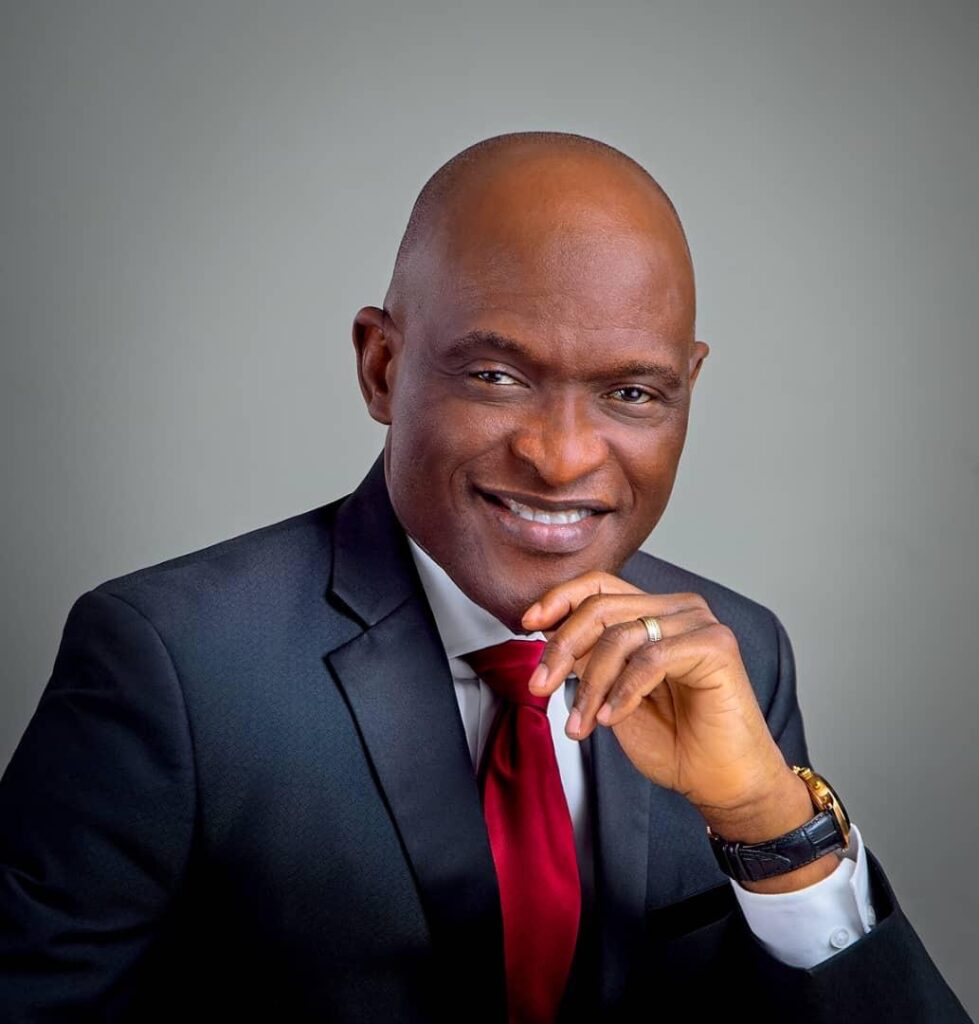
By Yinka Adebayo, FRPA Chairman, The Peak Performer Awards 2025-2026
Introduction
Nigeria’s next chapter of progress will depend not only on the resources we possess, the ambitions we articulate or the opportunities before us, but on how effectively we utilise our human capacity and how consistently our institutions translate potential into results.
This is a question that deserves greater attention from business leaders, policymakers, employers and everyone concerned about Nigeria’s economic and institutional future.
We have talented people, ambitious entrepreneurs, capable professionals and institutions with significant opportunities to create value. Yet the existence of potential does not automatically translate into performance. The difference lies in whether people are enabled to contribute meaningfully and whether institutions have the leadership, systems and discipline to convert their capabilities into sustainable results.
That is why I believe two questions deserve to be considered together.
Are we fully utilising the capacity available to us? And are our institutions equipped to convert that capacity into enduring performance?
These questions form the foundation of The Peak Performance Summit & Honours 2026, taking place on Friday, 20 November 2026, at the MUSON Centre, Onikan, Lagos, under the theme “Unlocking Capacity. Redefining Performance.”
Convened by CHAMP® Global Leadership Consulting through The Peak Performer® Africa, the platform brings together two complementary experiences i.e. NO MORE SHRINKING® — The Full Capacity Experience in the morning, and The Peak Performer Awards 2026 in the evening.
Although distinct in their focus, both experiences address a shared national imperative for creating the conditions for people and institutions to perform at their best.
The Female Capacity Question: Are We Fully Utilising Women’s Capacity?
The first part of this conversation concerns human capacity, with particular attention to women in Nigeria’s marketplace.
In many industries, women contribute knowledge, professional expertise, creativity, leadership and entrepreneurial ambition. The question is whether the environments in which they work and lead enable them to translate these capabilities into their fullest contribution.
Representation matters, but it is not the entire story. We must also consider access to opportunity, participation in consequential decisions, professional advancement, recognition of contributions and the institutional conditions that enable women to exercise their capabilities.
When talent is underutilised, the consequences extend beyond the individual. Employers may miss opportunities to strengthen their leadership pipelines, improve decision-making and develop organisational capability. The wider economy may also lose value that could have been created through fuller participation.
This is why the conversation around female capacity must move beyond celebration alone. It must also examine the conditions that enable women to contribute, lead, innovate and influence outcomes.
NO MORE SHRINKING® — The Full Capacity Experience provides a platform for advancing this conversation.
A central feature will be Dr. Abiola Salami’s keynote address, The State of Female Capacity Utilisation in Nigeria, alongside the unveiling of the No More Shrinking® Full Capacity Report, based on an assessment currently being conducted.
The experience will bring together focused discussions, research insights and recognition of women and institutions advancing female capacity.
Its importance lies in the opportunity to connect evidence with reflection and reflection with action. We need to understand not only where capacity may be underutilised, but also what individuals, employers and institutions can do to create better conditions for meaningful contribution.
For corporate leaders, this is a strategic consideration. Developing talent is important, but enabling talent to contribute fully is equally essential.
The Institutional Question: Are We Converting Potential into Performance?
The second part of the conversation concerns the institutions responsible for translating ambition, resources and human capability into results.
In business, the existence of a strategy does not guarantee effective execution. Financial resources do not automatically produce operational excellence. Nor does a prominent leadership title, by itself, establish the capacity to build an institution that performs consistently.
Sustainable performance requires alignment between direction and execution. It requires capable people, sound governance, disciplined decision-making, accountability and systems that enable organisations to adapt and deliver.
It also requires continuity. Institutions should be capable of sustaining their purpose and performance beyond the tenure of individual leaders. The strength of an institution is reflected not only in what it achieves today, but also in the capabilities and systems it builds for tomorrow.
This is why I consider the Performance Leadership Index 2026 an important component of the November gathering.
At TPP Awards 2026, Dr. Salami will deliver the keynote address, The State of Performance Leadership in Nigeria, and unveil the Performance Leadership Index, a proprietary framework developed to assess institutional performance leadership through defined dimensions and structured evidence.
The Index is designed to encourage a more rigorous examination of institutional performance, extending beyond visibility and isolated achievements to consider the leadership, organisational capabilities and disciplines that support sustained results.
The evening will also feature a panel discussion titled From Leadership to Results: Building Institutions That Convert Potential into Performance. The discussion will explore the relationship between strategy and execution, leadership accountability, organisational culture and the systems required to sustain performance.
The programme will include three categories of institutional awards based on performance leadership evidence, individual recognitions and a spotlight on Otunba Bimbo Ashiru’s tenure as Chairman of Odu’a Group.
These elements bring together research, dialogue and recognition around a common question i.e. what does it take to build institutions that consistently deliver sustaianble performance?
Why These Two Conversations Belong Together
The connection between female capacity utilisation and institutional performance is fundamental.
People contribute within institutions. The opportunities they receive, the responsibilities they assume, the decisions they influence and the results they produce are shaped partly by the environments in which they operate.
An institution that fails to utilise the capabilities of its people may be limiting its own performance potential. Equally, talented individuals need effective leadership, enabling systems and clear accountability if their contributions are to translate into sustained organisational results.
This relationship makes the two experiences complementary.
The morning examines the conditions under which women can contribute at their full capacity. The evening examines the leadership and institutional disciplines required to translate human and organisational capabilities into measurable, sustainable performance. Together, they invite us to look beyond the question of what Nigeria possesses and examine what Nigeria is achieving with what it possesses.
As Chairman of TPP Awards, I believe this is an important conversation for corporate Nigeria. Organisations must continuously consider how they develop people, deploy talent, execute strategy, strengthen governance and prepare for the future.
It is equally important for the media, professional communities and the wider public to engage with these questions. The standards we celebrate can influence the standards we aspire to achieve.
Recognition Must Encourage Higher Standards
Recognition has an important place in the development of people and institutions. It can draw attention to meaningful contributions, encourage excellence and provide examples from which others can learn. However, recognition is most valuable when it is connected to clearly defined standards and credible evidence.
For this reason, the institutional recognitions associated with the Performance Leadership Honours are linked to the applicable assessment framework and evidence requirements. The intention is to encourage attention to the leadership practices, organisational capabilities and disciplines that contribute to sustainable performance.
Similarly, NO MORE SHRINKING® places institutional responsibility alongside the celebration of individual women. Advancing female capacity requires more than applauding achievement; it also requires examining the environments, decisions and opportunities that make achievement possible.
Both experiences therefore seek to make recognition part of a wider conversation about standards, responsibility and progress.
The reports and Index will provide the respective assessment foundations for that conversation. Their value will depend on the quality of the evidence, the discipline of the methodology and the extent to which their insights inform better decisions.
An Invitation to Nigeria’s Leaders
The Peak Performance Summit & Honours 2026 is an invitation to engage with two questions that matter to the country’s future.
The first is whether we are creating the conditions for people, particularly women, to contribute at their full capacity. The second is whether our institutions are building the leadership, systems and organisational capabilities required to turn potential into sustainable performance.
These questions should concern CEOs, board members, human resources leaders, entrepreneurs, policymakers, professional associations and everyone with responsibility for developing people or leading institutions.
They also deserve the attention of the media, whose ability to bring important issues into public conversation can help extend their influence beyond a single gathering.
On Friday, 20 November 2026, NO MORE SHRINKING® — The Full Capacity Experience will begin at 8:00 a.m. at MUSON Centre, Onikan, Lagos. TPP Awards 2026, featuring the Performance Leadership Honours™, will follow at 6:00 p.m. at the same venue.
I invite business leaders, institutions, professionals and media organisations to engage with this platform, contribute to the conversation and consider the implications for their own spheres of influence.
Nigeria’s progress will depend not only on the capacity of its people, but also on the quality of the institutions through which that capacity is expressed.
Our next performance frontier is to ensure that more of that capacity is unlocked, more of it is translated into results, and more of those results are sustained.
One day. Two defining experiences. One national imperative: Unlocking Capacity. Redefining Performance.
For enquiries and participation details, contact team@tppafrica.com.

